
-
Film Website SEO & Discoverability
- Posted on 14th Jan
- Category: Assemble
We work with a lot of filmmakers and we know that they are very attuned to the creative decisions that need to be made when building a film’s website. This is great, it means that our designers can dive straight in a speak the same language as the filmmaker. However, it’s easy to get carried away with creative considerations and the forget basics of what the website is trying to achieve. In essence your film’s website is the key discovery asset you have for the release of your film and you want to ensure it reaches as many eyeballs as possible.
What this means in practice is that you have to focus on quite dull, tech and marketing concepts in the planning and implementation of your site. The first step in that process is to ensure that each page of your site is optimised to give search engines the best of surfacing your site when a user searches for your film. The more optimised the content and the metadata on your pages the more Google and the other major search engines will reward you with traffic.
The obvious example of poor discoverability is when you search for a film, scroll through pages of results with IMDB, Rotten Tomatoes, LetterBoxd links and find finally link to the film’s official website on page 5. Usually this link is accompanied by no contextual information and is nothing more than the name of the film as a blue link on a Google search list. In truth, statistically speaking, you’d have given up looking a long time before you reached page 5. In cases like this the website is buried by Google because the page isn’t well optimised but what does this mean? And why do some websites have more contextual information around their Google search result than others?
Search Engine Optimisation Basics
There’s no magic bullet for Search Engine Optimisation (SEO); there isn’t a formula you can follow to ensure your website ranks at the top of a search engine's results. However, there are a series of best practices you can employ to give you the best possible chance:
Choose your domain carefully
Google still favours domains which include the search term. For example, if I search for “Drive movie” the top ranking site on Google is a fan-site with the domain drive-movie.com. Despite the fact it is not the official ‘Drive’ website it still ranks as #1 because of the keywords in its domain.
Take time to think about content
Search engines read the content on a page programmatically and make decisions about ranking based on what they find. A key piece ensuring your site is well understood is writing strong, meaningful content but it’s also about making sure your developers consider semantics carefully. As with language semantics in HTML denote meaning and the way in which your developer constructs your page (also known as marking up the page) has a dramatic effect on how well the search engine understands what it’s reading. In particular consider your key text for a page, this should appear in what’s called an h1 element. The h1 is your most important heading on the page and search engines pay close attention to it. Likewise, the title of the page is what Google will display in its search results listing so ensure that the title is A) meaningful and B) will be immediately understandable to a user.
Metadata
Metadata rules the world of SEO. This is the data that as users we don’t see but is contained on a page and is read by the search engines to learn more about a website. Common metadata information includes a website description and search keywords. This is used by Google (and others) to better understand the content of your site but also to provide more contextual information to the user. The meta description for example is included as a small piece of text under the blue link in Google search results, this extra information makes it easier for users to make a decision about whether to click through to your website.
Likewise, metadata is an opportunity to give social networks more information about your website. This information is called Open Graph data and it is read by social networks when a user shares a page on your website. This is where the default image and text appears from when you share a link on Facebook. Discuss with your web developer what information they need to flesh out your metadata as much as possible. Similarly, if you’re using a CMS or website builder make sure you fill out all those optional form fields that appear to surplus to requirements because they are usually really important and make your website far more readable to a search engine.
Don’t try and cheat the search engines.
Google hates a cheat. In the past people have tried to fill their pages with keywords to game the system or buy links or clicks from dubious “SEO experts” but there’s no quick fix and these techniques should be avoided at all costs. If someone says they can get you to the top of the Google rankings quickly and cheaply, just say no! The major search engines punish sites that employ these techniques sending them plummeting down the rankings and making them all counter productive. Don’t do it, it’s as simple as that.
Performance and mobile optimisation.
In a recent update Google announced they are giving priority to sites that best serve mobiles and are the most performant. This is because with the rise of mobile browsing Google, and other search engines, are trying to encourage website developers to produce website that are mobile friendly. This means making websites that are smaller (in terms of file size) and are therefore more performant and also designing sites that are readable and usable on all devices. The better your site is for mobile users the higher your site will rank on Google. You can test how your site performs using Google’s free testing tools for page speed and mobile-friendliness.
-
Five Questions with Brenda Coughlin
- Posted on 27th Aug
- Category: Filmmaker Profiles
A committed change-maker, Brenda Coughlin is a producer, social justice seeker, unapologetic progressive, and self-described rabble-rouser.
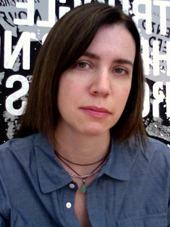 As co-founder of the non-profit media company Civic Bakery with Anthony Arnove, she established the Impact Producers Group and Impact Socials, the group's monthly networking event for creative change-makers (with Borderline Media.)
Brenda is a producer of the documentary feature film Dirty Wars (2013), which premiered at the Sundance Film Festival where it won the Cinematography Award for U.S. Documentary. IFC Films | Sundance Selects released ‘Dirty Wars’ in theaters throughout North America in June 2013. The film has gone on to receive critical acclaim, including nominations for the Cinema Eye Honors and the Writers Guild Awards, as well as being voted onto the documentary shortlist for the 2014 Academy Awards.
Coughlin is also a producer of ‘The People Speak’ documentary project, with Howard Zinn, Chris Moore, Josh Brolin, Anthony Arnove, and Matt Damon. The original US special (2009) is the film companion to Howard Zinn’s bestselling book ‘A People’s History of the United States’ and its primary source companion, ‘Voices of a People’s History’. ‘The People Speak’ premiered on the History Channel in December 2009. International commissions include an original production in the United Kingdom, co-directed by Colin Firth and broadcast on AETN UK in October 2010, and a second original production in Australia broadcast on Foxtel in December 2012. With the historian Howard Zinn, she co-founded the non-profit organization ‘Voices of a People’s History’, which runs performing arts and education programs in communities and schools through the United States.
For the last fifteen years, Coughlin has worked with non-profits and U.S. foundations supporting progressive causes and has been part of social justice movements in a range of areas, from prison abolition to antiwar organizing. Coughlin was a Sundance Creative Producing Lab Fellow in 2012. She has a MA in Sociology from Columbia University, and is a graduate of Harvard University.
We caught up with this remarkable woman, and asked her five short questions. Her responses – as expected - are illuminating!
Assemble: What is your first memory of filmmaking?
Brenda Coughlin: I came to filmmaking much later in my working life. So my first memory is sitting in a bar with the crew for The People Speak, two days before shooting began, and reveling in how generous they all were to let a newbie like myself into all their plans. It was the experience of a lifetime.A: If you weren't a filmmaker, what do you think you would be?
BC: Even as a filmmaker, I do so many other different kinds of work. When I can't tell a story in a film, there's also books, plays, protests, photographs, and so many other mediums at our disposal.A: What has been your biggest challenge, as a filmmaker?
BC: Being patient.A: What are you most proud of, in the films you've produced?
BC: I'm most proud of the camaraderie and solidarity with the cast and crew on all The People Speak productions. Everyone was there because they wanted to be part of something important, real, and more than themselves. On Dirty Wars, I'm most proud that we were able to help challenge, in however small a way, the endless wars and senseless destruction of the U.S.-led "War on Terror."A: If you could guide a generation of filmmakers with just one sentence, what would that sentence be?
BC: Keep the faith, and stick it to The Man.--
LEARN MORE
- Official website for Dirty Wars
- Official website for Civic Bakery
-
Choosing a Domain Name
- Posted on 6th Aug
- Category: Website Tips
Choosing a domain name
Nothing is more immediate than your film’s domain name. Back in the dawn of the internet age, it was much easier to get the one you wanted. However, with domain names increasingly claimed, nowadays it can be a bit more of a stressor deciding which to pick.
But don't despair! We're here with some quick and helpful tips, based on the results we've seen with the websites using Assemble.me as a platform.
Tip 1: Shorter is better
The difference between MyMovieisSoAwesomeYouBetterBel
ieveIt.com and AwesomeMovie.com is a question of kindness. Would your 85 year old grandmother remember the former domain name? Would she be able to type it in easily? Make it simple, make it short, be kind to your grandmother. It also fits better on a business card! Also, don't forget that hyphens confuse people. When you can avoid them. For instance xyz-themovie.com would be much better as xyzthemovie.com. If your film’s name is extremely long, tease out the most obvious. Ex: SidandNancy.com would be a good domain name for a film called ‘The Tumultuous Lives of Punk Legends Sid Vicious and Nancy Spungeon’.
Tip 2: Match your social media
Our films’ presence is increasingly distributed across social media platforms. If you have different names for your profiles and website, it will be that much more of a mental stretch for your potential audience to seek you out. Try to keep your online presence as consistent as possible, and that definitely includes your domain name.
Tip 3: Dot com beats dot anything else
We say car, you say four wheels. We say hand, you say five fingers. We say internet, what do you say? Most likely “.com!”. In other words, when it comes to domain names, a .com is the obvious conclusion. Asking people to rethink the self-evident is asking for confusion. It’s not insurmountable, by any means, and many people consciously opt for a .net or a .tv (heck, our website is called Assemble.me for a reason). But, still, best to keep it simple and just go for the obvious.
BUT! For every rule there's a good exception. You can also consider domain hacking, which is shorthand for websites that use domains as part of the name. In this instance, something other than .com could be useful to you. Examples of domain hacking include gaug.es, goingslow.ly, goodperfu.me or, for that matter, assemble.me
Tip 4: Use the name of the film
If you can get it, use the name of the movie. If that fails, use the name of the film and add a qualifier like ‘film’ to the end. Examples: xyzfilm.com or xyzmovie.com or xyzthemovie.com
Tip 5: Own your domain name
Imagine this scenario: A production company has an intern register the domain name to their new movie. The intern goes off back to college, and the production company finds that the domain name was registered under his name, and can't get ahold of him to get the information to transfer it over or renew it. Lesson learned. Always make sure the domain name information is accessible to those in the company that might need it.
Tip 6: Where are some good places to buy domain names?
We like enom.com. Also, godaddy.com has excellent customer service if you can handle all the extra information you'll have to process to figure out your core needs on the site.
OK! Let us know of any thoughts in the comments below. Disagree strongly? We are keen to be corrected.
Most importantly, good luck! Or rather, goodluck.com!
-

Four Questions with Nancy Spielberg
- Posted on 6th Aug
- Category: Filmmaker Profiles
Nancy Spielberg.
The name – of course – cannot help but evoke thoughts of filmmaking royalty. And, indeed, Nancy grew up surrounded by some royally committed filmmakers: Her father Arnold started the production company she still uses today, and her brother Steven gave her her very first roles (more on that, below).
Her early affinity to filmmaking notwithstanding, Nancy has a diversity of interests and a strong sense of social consciousness, which have permeated her career, and made for an interesting, yet non-linear path. From her youthful exposure to the business of film production to her very first courses in filmmaking in New York, she went on to work in jewelry manufacturing. The jewelry business provided her with the platform she needed to found and launch several charities – including A Bid for Charity (with co-founder Bobby Valentine), Children of Chernobyl, Project Sunshine, and the US Branch of the Jerusalem Academy of Music and Dance.
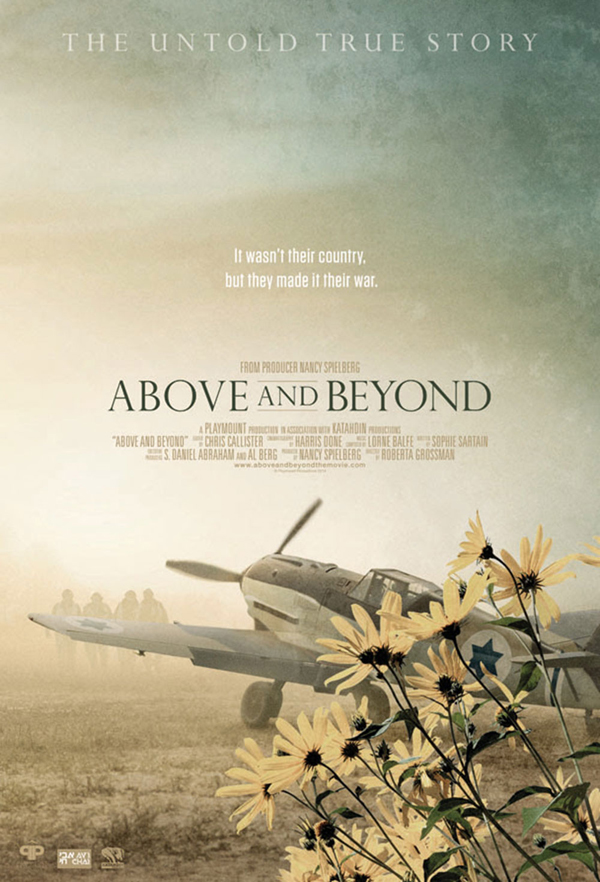
All the while, however, her film roots were spreading: She served as a consultant, executive producer and producer for a number of projects including the Oscar-winning documentary ‘Chernobyl Heart’, and PBS series ‘Elusive Justice: The Search for Nazi War Criminals’- among others. Adopting the production company her father founded in 1968 - ‘she has relaunched ‘Playmount Productions’ and is currently producing the feature documentary ‘Above and Beyond’.
‘Above and Beyond’ recounts the harrowing missions of the men who – in 1948 - helped repel five armies and create Israel’s Air Force. Filmed in the U.S., Israel and the United Kingdom, ABOVE AND BEYOND is directed by Roberta Grossman (Blessed Is the Match), with cinematography by Harris Done (The Last Days), special effects by Industrial Light & Magic and an original score from Hans Zimmer’s Studio.
We sat down with Nancy to learn a bit more about this generous and driven woman, and to gain the benefit of a few insights into filmmaking.
Assemble (A): What is your first memory of filmmaking?
Nancy Spielberg (NS): Starring in an early film of my brother's: He was 16, I was 7. He told me to crawl in the grass and reach out for something- and he told me to look wide-eyed and curious.
Since it was about 100 degrees in the Summer in Phoenix [Arizona], I couldn't stop squinting and he kept saying "Stop squinting!" I saw black spots for weeks after that from staring into the sun.
That was my first role, in "Firelight".
A: What has been your biggest challenge, as a filmmaker?
NS: My biggest challenge is probably every filmmaker's biggest challenge- finding the funds to produce a compelling story.
Doesn't make a difference what your last name is (in fact, when it came to fundraising for the film, it actually worked against me "why isn't your brother or his friends just giving you the money?" was a question I heard often).
There's a story in your head… You see it so clearly... And there are no price tags in your head as you imagine scene by scene. Then, suddenly you pull out paper and pen and start scratching out figures, and as the figures rise higher and higher, your images start to crumble at the edges (gotta cut this, gotta cut that..).
But, sometimes you just can't cut that image- you know it's critical to the film and you just find determination to make it happen somehow, some way.
Exercising self control, making smart choices, being open to cuts- that's tough!
A: What excites you the most about your most recent film, ‘Above and Beyond’?
NS: ‘Above and Beyond’ has a huge heart. Every time I see it, I “emote.” I'm laughing, I'm crying, I'm proud to be an American, I'm wistful, I'm hopeful. It's a much-needed shot in the arm, at a time wen it's most needed.
Oh yeah, and I LOVE the score!!
A: If you could guide a generation of filmmakers with just one sentence, what would that sentence be?
NS: There are story-tellers and there are story listeners. Don't be afraid to tell your story, you will find the ears.]
Learn more about 'Above and Beyond' at aboveandbeyondthemovie.com
-
The Assemble Manifesto
- Posted on 25th Sep
- Category: Assemble
The expression ‘with great power comes great responsibility’ has become the catchphrase of our generation, pinned on contemporary indie filmmakers over and over again - probably even past the point of carrying any real significance: We are empowered to make our own choices, to find our own audiences, empowered to create our own marketing campaigns, not to mention empowered to make our own movies. And yet, we feel the burden of this privilege: We are empowered, yes, but also we are responsible to our films, and responsible for their successes and dreaded failures.
It’s no surprise then that many filmmakers feel overburdened. Empowered as we are, we still need to engage in the modern equivalent of the street corner VHS sales hustle: We need to gather those audiences. We need to sell those downloads. We need to craft a theatrical release. We need to get the views up. And we need to keep people excited. No small feat, and with tools and platforms spread across the internet, it certainly doesn’t always feel so empowering.
This is what Assemble is designed to fix.
I. SO WHAT IS ASSEMBLE?
Assemble is a web platform that allows filmmakers to manage all aspects of their films’ public life. It’s an integrated toolkit to build and manage a slate of film websites.
Starting in development, Assemble allows you to create a basic website and start collecting vital audience data.
As the film progresses, you can add to the website pre-built apps that allow you to grow your mailing list and find your audience, save time on repetitive tasks for you and your team, and geo-filter content to work across multiple territories, platforms and with multiple distributors.
Finally, as distribution kicks off, you have a customized, beautiful web presence for the film.
In short, we offer tools that help filmmakers help their film to find success.
We have four core beliefs, at Assemble.
1. Filmmakers should benefit from their work
2. Filmmakers should control the promotion of their work even when working with multiple distributors
3. Filmmakers should be able to collect meaningful audience data, not just 'Likes' or ‘Views’
4. Every film and every filmmaker should have a web-presence to be proud of
II. WHY WE CREATED ASSEMBLE
The team behind Assemble started off working with filmmakers on self-distribution projects as early as 2007. As our experience and learning grew, we discovered that the process of creating the all important website for a film was either very expensive when working with a web agency, or very painful when working with a freelancer: Support and quality tended to fall short.
Secondly, the pain of creating these necessary tools and assets meant often they are done poorly or forgotten altogether.
As filmmakers can only meet their goals when they have good tools, our mission at Assemble is to create website tools and apps that are easy to use, available to all, and that - through re-use - are affordable. Assemble also works well with the other emerging web tools for filmmakers. In fact, we embrace collaboration, and have formed partnerships with some of the best film-centric companies on the internet today; companies like Tugg, Gathr and Vimeo, to name a few.
To cap it off, we created a system where the tools talk to one another, and we topped it with a keen eye for design. And... Presto Chango! A set of website production tools that not only help create a well thought out, simple-to-use web presence for movies, but also allow the film team to manage all aspects of their crowd-gathering, online sales and film marketing efforts from one place.
Our core beliefs inspired a system that empowers filmmakers to present themselves in a way that works, to gather their audience and to communicate to that audience, sell to their audience, and – heck why not – impress their audience without being bogged down with the disempowering, sometimes overwhelming complications.
III. HOW DO WE DO THIS?
There are a few guiding principles that have informed Assemble’s tools. Firstly, that it's always in the filmmaker’s interests to promote the film directly, rather than to promote yet another platform. Secondly that the production team are always the most committed and passionate of advocates and - with the right tools and experience - can do the best job of promoting and selling the film. Lastly, we understand the importance of the film’s marketing materials / key art / branding. This is what really sells the film online. Anything we support has to work with the branding, and be very beautiful.
In order to best help independent films find their online audience, we also realized that we have to provide different solutions at each key stage of a movie’s life.
Our adaptable web presence thus includes early email capture functionality, social media integration and a blog for the earliest days of pre-production. When you are ready to move on to crowdfunding, Assemble easily integrates with Kickstarter and Indiegogo. Launch your trailer and add to it branding, a synopsis, screenings, festivals, reviews and even to sell products or link to platforms right from within the trailer widget. Later in the film’s life, the website can change with the flick of a button (and some data entry) to accommodate a shop, a press kit, downloadable film stills, a list of screenings with links to ticketing, a demand-it form so people can request a screening in their community, press links, and several other important apps.
Each of our apps is made just for film, and they work exactly as you would expect, out of the box. Moreover, the apps communicate with one another. For instance, adding information about where you can see the film in a particular territory can automatically appear on your Facebook page and in the trailer widget, all at the click of a button. We save you time.
Lastly, each app adapts by country so your website can properly support different territories being at different stages - ready for download in the USA but in theatrical in Australia - without interfering with one another. We allow your movie’s availability to appear exactly as you would like it to appear in each territory.
IV. WORKING WITH MULTIPLE FILMS?
If you are a distributor, production company or have a slate of films, Assemble works beautifully. It allows you to create a full website for you or your company – including individual pages for each of your films - in one well-designed place. All your film websites and your production company or filmmaker website can then talk to each other, and share vital information. For instance the press stills from one film are automatically added to the press area on your main site.
One of Assemble’s primary differentiators lies in the realm of its unique balance of customer support and customer empowerment. While we are quick to respond to technical, content and design requests, we also provide the tools filmmakers need to make many of these changes directly. Call it a hybrid approach: Agency-style personal support, with easy to use software - all a service we provide in our monthly pricing.
If you have further questions about Assemble, please take advantage of our excellent customer service by emailing us at [email protected].
